

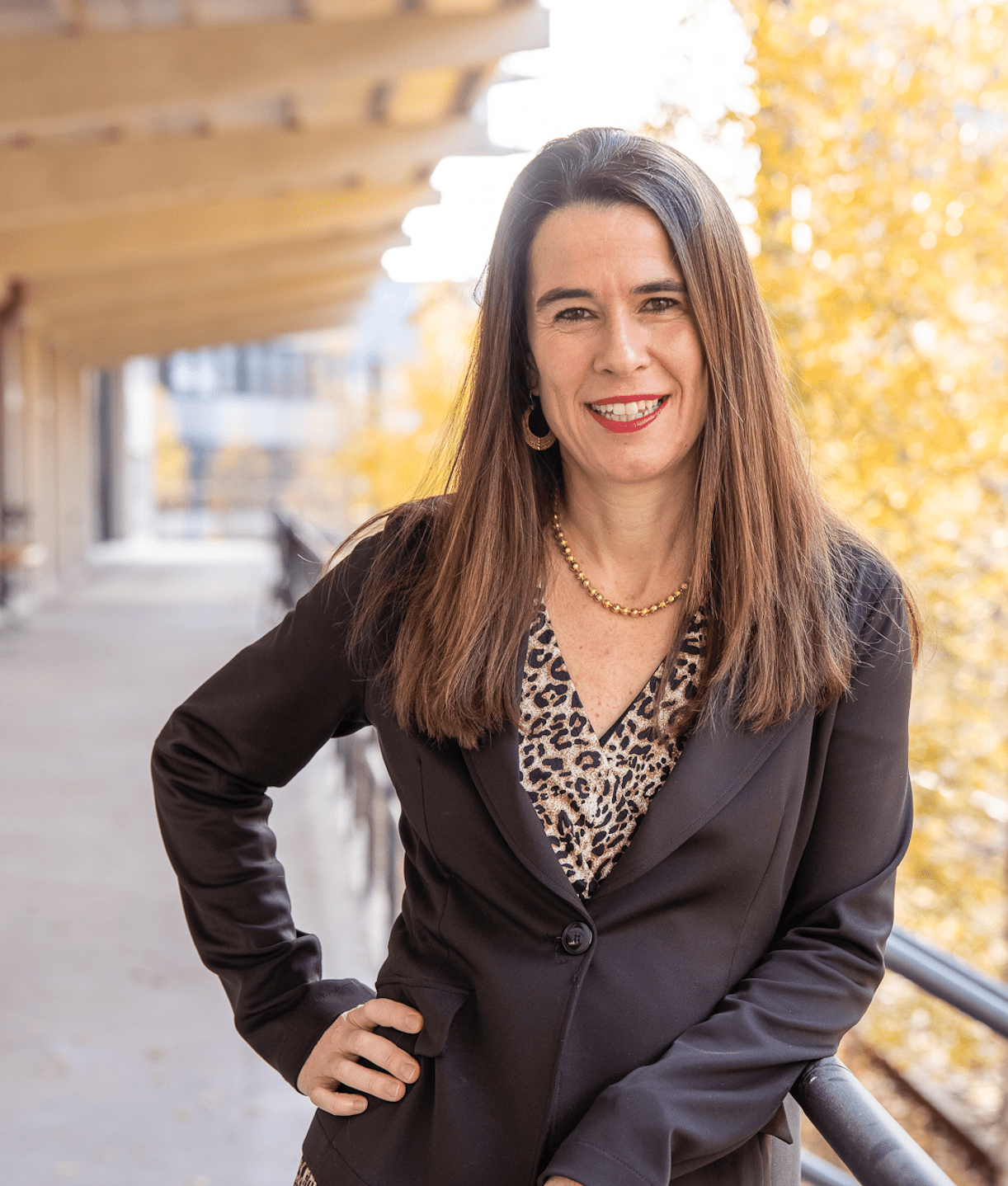
Tell us about yourself.
Thank you for having me. I know you have a passion for visiting countries around the world so I need to tell you first where I am from. Originally I’m from Portugal and I spent the majority of my career across different countries and International markets in the life sciences industry, holding both executive and non-executive roles. My experience spans different industries, including tech, pharma, and biotech, from global development to commercialization.
My background is in economics and I’m driven by leading, building and scaling businesses anchored on science and innovation to create healthier lives.
What inspires me the most is bringing teams and people together to create a lasting impact—not just within companies, but across the communities and ecosystems we serve. In healthcare this means scaling innovation that is both sustainable for healthcare systems and equitable across the globe. I love connecting people with a bigger purpose in healthcare and driving exceptional results.
You’ve held leadership roles across Big Pharma, biotech, and tech. What guiding principles have shaped your approach to leadership across such diverse industries and global environments?
Navigating different industries and company cultures can be uncomfortable because each reality is so different, with new unknown fields, cultures and very different playbooks requiring change, adaptability and fast learning. One constant remains across those differences: the responsibility of leadership. Who you are as a leader doesn’t fundamentally change, regardless of the context. For me balancing the unknown while being true to who you are is so important.
There are three core principles that guide me:
- Curiosity: Navigating those differences fuels my curiosity to open boundaries and seek how I can bring a new impactful perspective. I believe in building a rich portfolio of experiences and this has been a core fundamental on guiding my career path, enriching me as a person, as a leader and also as source of clarity in decision making.
- Connection to purpose: It’s important to me the impact of what we do, how we do and why it matters. In life sciences I see my mission as scaling innovation to bring new treatments to patients across the globe while ensuring health care systems are sustainable. Executing that mission with purpose will deliver superior business results.
- Trust: By nature I’m a person who gives trust and empowers people. I believe this is how people can have the space to innovate, to share their unique perspective and take agency to deliver exceptional results. On top uniting people around a common mission is what gives the strength to go every extra mile and make the impossible possible.
You’ve led large-scale transformations, integrations, and growth accelerations with multi-billion-dollar P&Ls. From your experience, what are the most critical factors leaders must master when driving transformation?
People engagement is number one. You need to engage early, explain why change is happening, and define success together. Every person—inside or outside the organization—plays a critical role in the journey and every person is at different stage of that transformation. Understanding the emotions the transformation brings plays a critical role – fear, loss, grief, excitement, energy, etc. Understanding those differences and bringing people together are the responsibility of a leader.
For that to happen empathy is equally important. Empathy allows leaders to understand how individuals perceive change differently. Some are naturally curious and embrace it faster; others can be more cautious, resistant. Give the support, listen to the needs, give confidence and be present makes people feel valued and encourages to follow the transformation journey.
Third is transparent communication. Being approachable, overcommunicating when possible, and sharing openly—or explaining when information cannot be shared—is essential.
Finally, anticipate change as much as possible. While some events, like crisis, are impossible to predict, we can anticipate changes and new business needs. Shaping, leading and engaging people early in these transformations ensures smoother adoption, fuels innovation and builds resilience and delivers superior results.
In your experience, what are the most meaningful differences between Big Pharma and biotech in today’s innovation ecosystem? How do these contrasts inspire or energize your work personally?
Biotech is about innovation creation—developing new science and breakthroughs. Big Pharma, play a bigger role on scaling innovation.
Biotech is fast, agile, and entrepreneurial with limited resources and higher risk. Big Pharma offers scale, abundant resources, organizational sophistication and complexity. Both worlds energize me and play complementary roles to advance and scale scientific innovation: biotech excites me with speed and resilience, while Big Pharma allows me to scale faster with global impact.
What drives you personally throughout your career?
First, working with incredible people and talent—those who are motivated, curious, courageous and aspire to make a broad impact. Second, science and innovation—exploring new opportunities and scaling breakthroughs to improve lives.
Combining people and purpose keeps me motivated and is a key ingredient to build and develop successful business.
You’ve worked in rare diseases. How does leadership in this space differ, and what opportunities remain underdeveloped?
Rare diseases are fascinating and complex . Only about 5% of rare diseases have treatments. Diagnosis is difficult—on average it takes 5–12 years. Clinical development is longer and riskier due to small patient populations. Finally, making treatments accessible is difficult because of requirements of different healthcare systems and time to generate the evidence to meet the different healthcare systems needs.
What makes leadership unique in rare diseases is the need to overcome these hurdles systematically—accelerate innovation in drug discovery and new treatment, time to diagnosis and time to patients.
You’ve worked across Europe, Canada, and other regions. How does cultural context shape leadership style, decision-making, and organizational impact?
Culture profoundly shapes leadership. People are motivated by different things and understanding those differences is what ultimately makes the impact of leadership unique. As a leader, it’s essential to understand what’s unique to unlock team’s potential —understand what motivates people, what unites them, and how to connect emotionally. Leading with heart makes it easier to bring teams along.
Drug development is a long process. How do you ensure commercial success, especially in areas of unmet need?
Commercial success means bringing treatments to patients at scale with equitable access.
For areas of unmet need, as it for rare diseases, most of times this means bringing a new standard of care to the market. This requires early market preparation or even creating the market. Early engagement during clinical development with patients, physicians, payers, and regulators is crucial to understand needs and expectations on end points, data generation and definition of the target product profile.
Early partnership and treatment experience complemented with disease awareness and education of patients and healthcare providers is essential to build confidence and to improve treatment guidelines.
Can you share some highlights of your career?
Certainly. Moving from tech to life sciences was a big highlight. Being at the intersection of science, innovation and business to improve care is a unique privilege and a humbling position. Leading country and regional organizations in Shire and Takeda allowed me to scale science and business and inspiring people to raise the bar for patients every single day. In those experiences I could build teams from scratch allowing the creation of opportunities to people to develop and thrive. Along those years I receive excellent mentorship from exceptional leaders. This inspires me to give back, to support and care for people and contribute for their aspirations to become reality.
Who or what has shaped who you are?
My parents gave me a safe harbor and unwavering support to experiment what I aspire to. This gave me the confidence to professionally, build diversity of experiences across industries, functions, and geographies which have shaped me the most.
Putting myself in uncomfortable positions challenged me, opened my mind, and taught me humility. This helped me knowing my values—integrity, respect, authenticity, and courage— that are my guide specially in moments of uncertainty when I seek clarity.
Lastly, what advice would you give emerging leaders following your path?
Be the number #1 to believe in yourself. Seek diverse experiences. Stay curious and open. Go to places you never imagine, experiment and enjoy. Focus on the journey and let the destination be the outcome. And above all, lead with purpose, integrity, and empathy.


